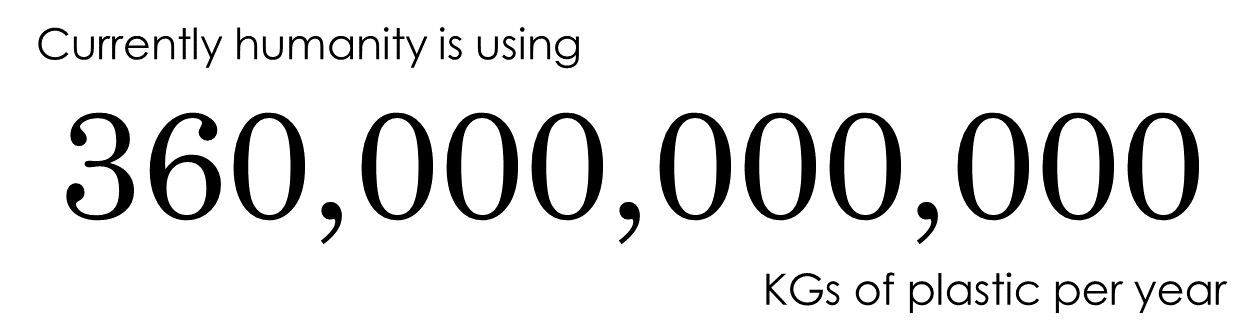
Plastic is a magical creation. It has invaded our everyday products serving as a better alternative to traditional materials in terms of durability, manufacturability, and monetary value. However, this parasite came along with an issue of disposal. Our plastic consumption has increased exponentially while the recycling and disposing methods for it failed to keep up.
This has led to the current situation we are in where this magical creation of humans has end up in places it’s not supposed to. Plastic waste in the environment causes ingestion of it for marine life at every level of the food chain. If this wasn’t scary enough, a major portion of oxygen is produced by the phytoplankton in the ocean. If the current trend continues, plastic would overweigh the fishes and other marine life in the ocean.
Cumulative production of plastic is more than 8300 million tonnes till date
2500 million tonnes (30 percent) of primary plastics was still in use in 2015
4600 million tonnes (55 percent) went straight to landfill or was discarded
700 million tonnes (8 percent) was incinerated
500 million tonnes (6 percent) was recycled
With constant research and innovation all around the world, engineers and scientists are working on various solutions.
New alternative materials are being developed to reduce our dependency on plastic.
With ever increasing awareness, eco consciousness and impact driven mentality is on the rise.